

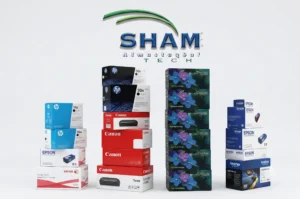
When a new reseller first contacts us about carrying toners and cartridges, there’s a request I hear almost every time.
“Can you send me your full catalogue? I want to carry everything.”
I understand the thinking. More models means more customers. More stock means more sales. It sounds right.
Here’s the reality: in toner cartridges alone, there are over 2,500 different models on the market. If a new reseller tries to stock all of them, they tie up enormous capital in slow-moving inventory — and most of those models sit on shelves for months without moving.
The resellers we’ve watched grow the fastest all did the opposite. They started small, placed a sample order, tested their market, listened to their customers, and then ordered more based on actual sales data — not guesswork.
This guide shares what we’ve learned watching hundreds of resellers succeed and fail in this category over 26 years.
What “Toners and Cartridges” Actually Covers
The phrase “toners and cartridges” sounds like one category. It is actually three distinct product lines, each serving different machines and different markets.
Laser toner cartridges are for desktop laser printers — compact office machines from HP, Brother, Canon, and Samsung that sit on a desk or shelf. This is the highest-volume product in B2B print supplies. Offices, schools, law firms, and small businesses all run laser printers. Every one of them reorders regularly.
Copier toners are for floor-standing photocopiers and multifunction devices — the large machines from Ricoh, Xerox, Canon imageRUNNER, and Sharp that you find in bigger offices, copy shops, hospitals, and government departments. These accounts are high-volume and high-loyalty. Once you’re the established supplier for a photocopier account, that relationship tends to last.
Inkjet cartridges are for inkjet printers — the compact home and small office machines from HP, Epson, Canon, and Brother. This is the home and consumer segment. Margins are tighter and the quality sourcing requirements are higher. More on this later.
For a detailed breakdown of the difference between toner and ink cartridges, read: Cartridge or Toner: Which One Does Your Business Need?
Which Brands Dominate and Where
Brand demand is heavily regional. Knowing your market before you build your SKU list is the difference between fast-moving inventory and capital stuck on a shelf.
HP is the dominant laser printer brand across the UAE, GCC, and most of Africa. HP toner cartridges — particularly the high-demand black models like the 85A, 83A, 106A, and 107A — are the single most requested SKU in almost every market we supply. If you carry nothing else, carry HP.
Ricoh is the dominant photocopier brand across the Middle East and Africa. Their MP and IM series machines are in offices everywhere. If your customers include any medium-to-large office accounts, Ricoh copier toner is essential.
Canon covers both segments — desktop laser printers (imageClass series) and large-format office photocopiers (imageRUNNER series). Two separate product lines requiring two different types of toner.
Brother is strong in the GCC and East Africa for compact office laser printers. Popular with small businesses.
Epson dominates the inkjet segment across many African and South Asian markets. Their EcoTank range is growing fast — shifting demand from traditional cartridges toward ink bottle refills.
Xerox is the second major photocopier brand in enterprise and government accounts — particularly strong in corporate environments alongside Ricoh.
The Three Strategies for Building Your SKU List
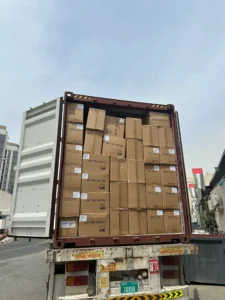
This is the question every new reseller asks: “Where do I actually start?”
There is no single right answer. It depends on what you want to build. But there are three clear paths, and each one has its own trade-offs.
Path 1: Hot Items — Maximum Volume, Thinner Margins
Start with the most popular, fastest-moving models. For HP laser toner, that means models like the 85A, 83A, 106A, and 107A. These are the bread-and-butter SKUs that every market needs and every reseller carries.
The upside: You will move product. These models are in constant demand. They are easy to source, easy to sell, and your customers know exactly what they are.
The trade-off: Because every other reseller carries the same models, competition on price is fierce. Margins are thinner. You will compete on price and relationships, not uniqueness.
This path works well as a foundation — get cash flowing, build your customer base, prove your quality. Then layer in the other strategies.
Path 2: New Models — Better Margins, Less Competition
The second path is to pivot toward the most recent printer models — like the HP 222A series. When a new printer model launches, the factories take time to ramp up compatible production. In that early window, quality is high because the better manufacturers are the first to produce, and competition is low because not everyone has caught up yet.
The upside: You can price better, win accounts that the hot-item suppliers cannot serve yet, and establish yourself as a supplier who can source the latest models.
The trade-off: Demand is lower than the established models. Not everyone has the newest printer yet. You need customers who are upgrading their equipment.
Path 3: Rare and Specialty Items — High Margin, Lower Volume
The third path is to focus on the hard-to-find models — older or less-common machines that most suppliers have stopped carrying. The resellers who buy these items have no other source. They will pay a meaningful premium.
The upside: You name your margin. Competition is nearly zero. The accounts that need these items are sticky — they’re not switching suppliers easily.
The trade-off: Volume is low by nature. You cannot build your business on specialty items alone. This path works best as a premium layer on top of either Path 1 or Path 2.
The Case for Compatible — And Why It Goes Beyond Savings
Most new resellers think the OEM vs compatible decision is purely about price. It is not. It is about what kind of business you are building.
Yes, OEM margins are tight. The manufacturer takes most of the margin, leaving the reseller with very little room. We have seen resellers work hard, move significant volume, and still end up with almost nothing left after costs because they built their entire business on OEM.
But the bigger argument for compatible is this: you can build your own brand on it.
One of our partners in a GCC country started with us years ago. A small order — a few boxes. He tested the quality, liked what he saw, and came back for more. Over time, he built his own brand around our compatible toners. He put his brand name on the packaging, marketed it, built recognition in his market.
Today, he takes multiple containers from us every month. He has roughly a third of his entire country’s laser toner cartridge market.
That is not luck. It is the result of two decisions: he committed to quality-controlled compatible, and he invested in his own brand. Every marketing effort he made, every relationship he built — the return came back to his brand, not to HP or Canon. His customers know and request his brand by name.
That compounding effect is what OEM resellers never get. When you resell original HP, every sale builds HP’s brand. When you sell your own branded compatible, every sale builds yours.
There is also a supply availability issue that most resellers only discover after their first large OEM order. When you place a big OEM order, the manufacturer will often tell you it is a back-to-back order — meaning they will confirm availability and timeline only after you have paid. Lead time is typically 8 to 12 weeks. You cannot tell your customer when to expect delivery. You cannot plan your logistics. That is a real operational problem.
With compatible, we can fulfill most large orders in 2 to 4 weeks, with clear timelines from the moment you confirm.
The Right Way to Start: Sample First, Scale Second
Back to the 2,500 models point.
The correct approach for any new reseller is to start with a sample order across a small number of SKUs. Not to test our quality — that is part of it — but more importantly to test your own market.
Place an initial order. Distribute to your customers. Watch what sells fast, what sits, and what generates complaints or repeat orders. That data is worth more than any forecast or market report.
When you reorder, you will be ordering from real back-data. Not speculation. Your second order will almost certainly be more profitable than your first because you will know exactly what your market wants.
This approach also minimises your risk. A reseller who goes all-in on 50 models in their first order and gets the mix wrong has a serious inventory problem. A reseller who starts with 5 models, proves them, and scales has full control.
When Dubai Stock Makes the Difference

For resellers in the Middle East and Africa, there is a practical advantage to working with a Dubai-based supplier that only becomes obvious when things get urgent.
One of our clients had just secured a government tender. While they were working through the tender fulfillment, their regular stock of one specific item ran out faster than expected — high demand from their regular customers hit at the same time as the tender requirement.
We arranged 300 emergency units and had them moving within hours. The tender delivery date was protected. The customer’s regular business kept running.
A 30-day sea shipment from China cannot do that. A supplier with no UAE stock cannot do that. Dubai warehouse stock exists specifically for situations like this one.
For any reseller serving markets in the UAE, GCC, East Africa, or South Asia — a supplier with real Dubai stock is not a nice-to-have. When you need it, it is the only thing that matters.
An Honest Word on Inkjet
Inkjet is a real market and there is money in it. But we are always honest with new resellers about what they are getting into.
The margin challenge with inkjet compatible is not simply that the product is cheaper. It is that quality-controlled compatible inkjet genuinely requires higher-grade materials to produce correctly. The nozzle tolerances are tighter. The ink chemistry is more complex. A compatible inkjet cartridge that cuts corners does not just produce bad prints — it can damage the printer’s printhead, which is an expensive component.
When a customer comes back to you with a clogged or damaged printer, the cost of that complaint far exceeds whatever you saved on the cartridge.
This is why we are selective about our inkjet supply chain. And it is why our margins on inkjet are lower — we do not compromise on the materials cost.
For new resellers, our honest recommendation is to establish your toner business first. Get your laser toner moving, build your customer relationships, prove your quality. Then add inkjet as a second layer once you understand your market’s demand.
For our full wholesale inkjet range: Inkjet Cartridges →
الأسئلة الشائعة
What is the difference between toners and cartridges?
Toner cartridges use dry powder and go into laser printers and photocopiers. Ink cartridges use liquid ink and go into inkjet printers. Both are types of “cartridges” — the word covers both. When people say “toners and cartridges,” they usually mean the full range of print consumables across both types.
Where can I source toners and cartridges wholesale in Dubai?
Sham Tech has supplied compatible and original toners and cartridges wholesale from Dubai since 1999. We serve resellers in 35+ countries across the Middle East, Africa, and Asia. Same-day dispatch for UAE orders. WhatsApp us for current pricing: +971581890984.
How many toner cartridge models are there?
There are over 2,500 different toner cartridge models across all brands and printer generations. This is why we advise new resellers to start with a focused sample order rather than trying to carry everything. Start with the most popular models for your target market, prove the demand, then expand.
Is compatible toner as good as original?
For standard business printing — text documents, reports, invoices — quality-controlled compatible toner performs identically to OEM. The key is sourcing from manufacturers with proper quality control, ISO certification, and low defect rates. We work exclusively with ISO 9001 certified factories with defect rates below 1%.
What is the minimum order for toners and cartridges wholesale?
For new reseller partners, we recommend a sample order rather than a large opening order. This lets you test your market before committing significant capital. Get in touch to discuss the right starting point for your business.
Ready to Build Your Toners and Cartridges Business?
Sham Tech has been supplying wholesale toners and cartridges to resellers across the Middle East, Africa, and Asia for 26 years. We’ve seen what works and what doesn’t. Start with a sample, build from data, and we’ll grow with you.
View Laser Toner Cartridges → View Copier Toners → View Inkjet Cartridges → WhatsApp for wholesale pricing →